Your Complete Serengeti Safari Guide: Essential Tips for an Unforgettable Tanzania Adventure
Planning Your Journey with a Reliable Serengeti Safari Guide
Serengeti safari guide resources are plentiful online, but knowing which information to trust — and how to apply it — can be the difference between an average trip and the wildlife experience of a lifetime. The Serengeti is one of Africa’s most iconic destinations, a vast, breathtaking ecosystem that has captivated explorers, photographers, and nature lovers for generations. Whether you’re a first-time visitor or a seasoned traveler returning for another chapter, understanding the landscape, the seasons, the wildlife, and the logistics will ensure your Tanzania adventure exceeds every expectation.
This guide walks you through everything you need to know — from the best time to visit Serengeti to how to track the legendary wildebeest migration Tanzania is so famous for.
—
Understanding Serengeti National Park Tanzania
Serengeti National Park Tanzania covers approximately 14,750 square kilometers of open savanna, woodland, and riverine forests in northern Tanzania. Established as a national park in 1951 and later declared a UNESCO World Heritage Site in 1981, the Serengeti is one of the oldest and most scientifically important ecosystems on the planet.
The park shares borders with Kenya’s Maasai Mara to the north, creating a massive, interconnected wildlife corridor that supports one of the largest and most diverse animal populations in the world. Within the Serengeti, you’ll encounter:
– Big Five wildlife: lions, leopards, elephants, buffalo, and black rhinos
– Predators: cheetahs, hyenas, wild dogs, and crocodiles
– Bird life: over 500 species, including ostriches, secretary birds, and flamingos
– Vast herds: zebras, gazelles, giraffes, and, of course, wildebeest
The park is divided into several distinct zones, each offering a unique experience. The Seronera Valley in the central region is ideal for year-round game viewing. The Northern Serengeti near the Mara River is where dramatic river crossings take place. The Southern Serengeti and Ndutu area is where wildebeest calving occurs between January and March. The Western Corridor offers an off-the-beaten-path adventure with fewer tourists and remarkable birdlife.
—
The Wildebeest Migration Tanzania: Nature’s Greatest Spectacle
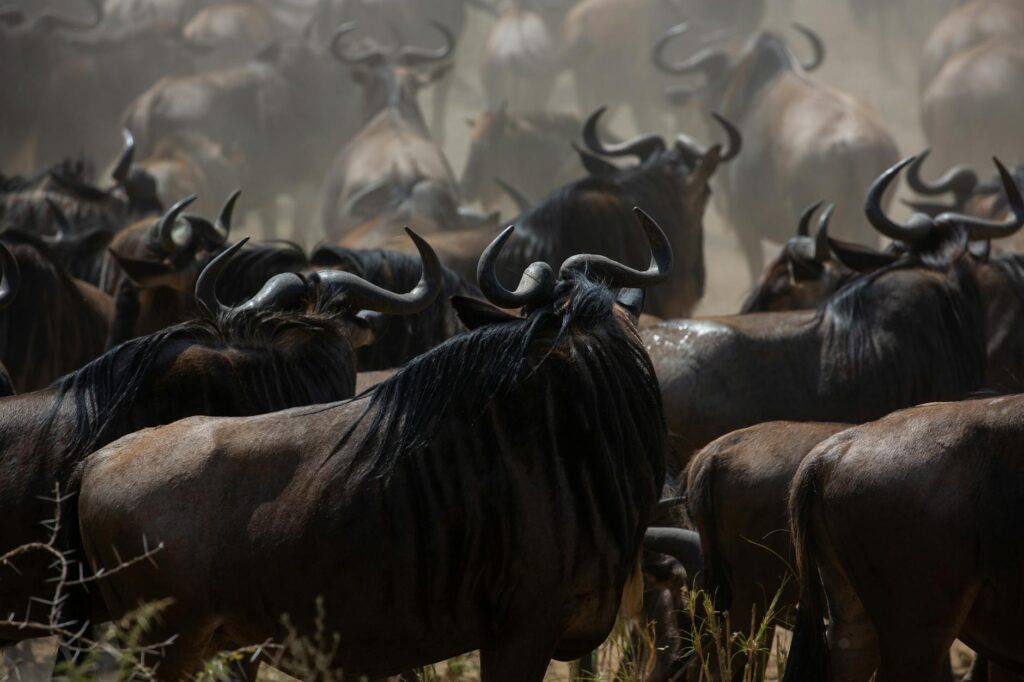
No discussion of the Serengeti is complete without talking about the wildebeest migration Tanzania offers to the world. Often described as the greatest wildlife show on Earth, this annual migration sees over 1.5 million wildebeest, accompanied by hundreds of thousands of zebras and gazelles, moving in a continuous circuit across the Serengeti-Mara ecosystem.
The migration is not a single event but a year-round cycle driven by rainfall and the availability of fresh grass. Understanding this cycle is key to planning your visit.
The Migration Calendar at a Glance
| Month | Migration Highlight | Region |
|—|—|—|
| January – March | Calving season; 8,000 wildebeest born daily | Southern Serengeti/Ndutu |
| April – May | Herds move northwest; green season begins | Western Corridor |
| June – July | River crossings begin | Western Corridor/Grumeti River |
| August – October | Dramatic Mara River crossings | Northern Serengeti |
| November – December | Herds return south | Central and Eastern Serengeti |
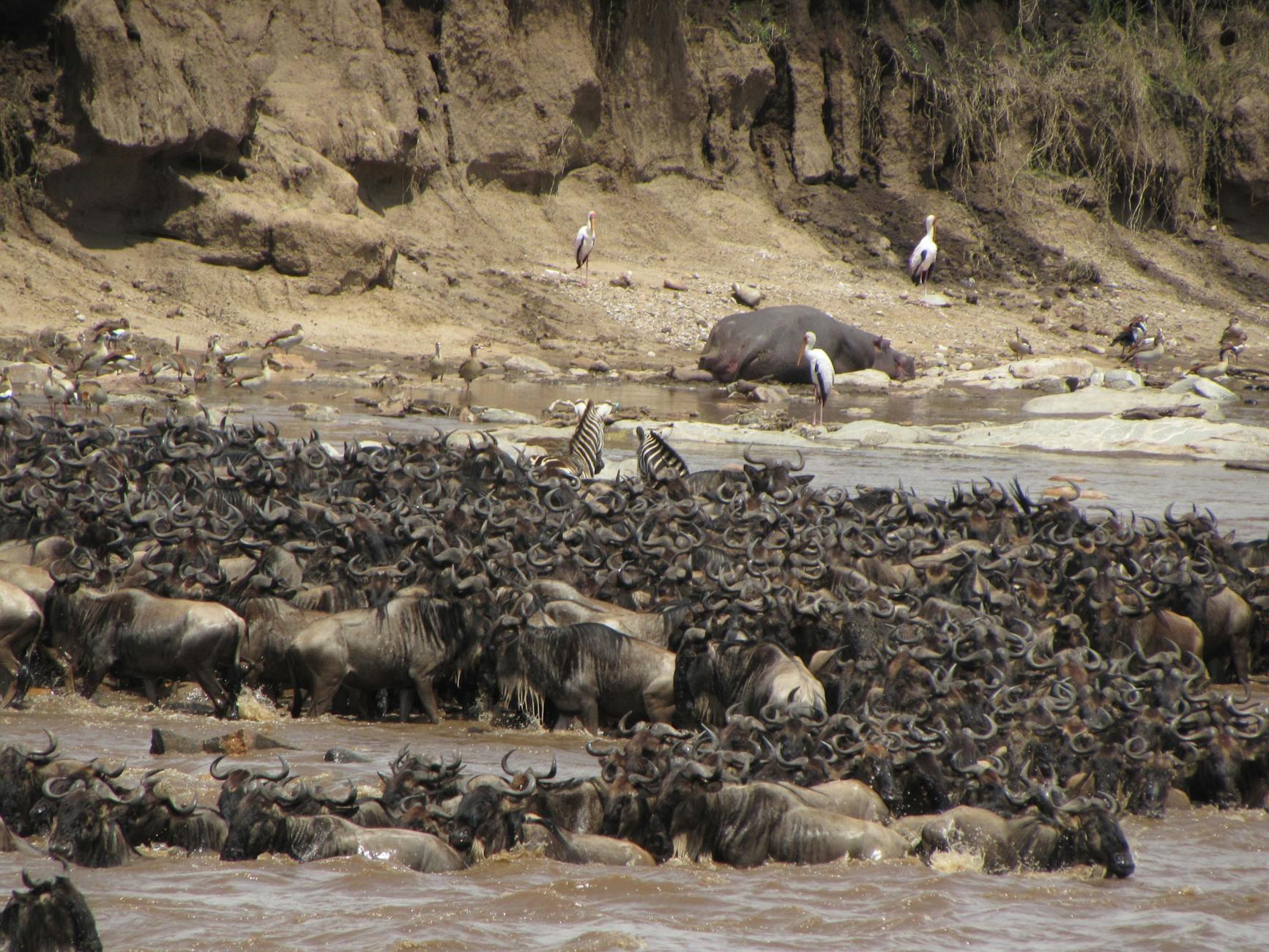
The Mara River crossings (July–October) are the most dramatic and widely photographed moments. Thousands of wildebeest plunge into crocodile-infested waters in a chaotic, adrenaline-filled spectacle that defines the raw energy of African wildlife. Witnessing even one crossing is a moment that stays with you forever.
The calving season in the south (January–March) is equally powerful in a different way — witnessing thousands of newborn wildebeest taking their first steps while lions and cheetahs lurk nearby is a profound reminder of nature’s delicate balance.
—
Best Time to Visit Serengeti: Matching Your Trip to Your Goals
Choosing the best time to visit Serengeti depends entirely on what you want to experience. The good news? The Serengeti rewards visitors in every season.
Dry Season (June – October): Peak Safari Season
The dry season is widely considered the best overall time for game viewing. Vegetation thins out, animals gather around water sources, and the Mara River crossings are in full swing. Temperatures are pleasant, ranging from 15°C to 25°C (59°F–77°F). However, this is also peak tourist season, so expect higher prices and more crowded game drive routes — especially in popular areas.
Best for: River crossings, predator sightings, photography, first-time visitors
Green Season (November – May): Hidden Gems and Calving Magic
The green season brings lush landscapes, newborn animals, and significantly fewer tourists. While roads can be muddy and some remote camps close, the rewards are significant. Birdwatchers will be especially delighted, as migratory birds flood the park between November and April. The calving season in January–March is a genuine highlight for those who can plan around it.
Best for: Budget travelers, birdwatching, calving season, photography of lush landscapes
Shoulder Months (November and May): Best of Both Worlds
For travelers seeking a balance between crowd levels, price, and wildlife activity, November and May offer a sweet spot. These transitional months often deliver excellent game viewing with fewer vehicles and lower accommodation costs.
—
Essential Tips for Planning Your Serengeti Safari
Choosing the Right Safari Style
The Serengeti accommodates many different types of travelers and budgets:
– Luxury lodge safaris: Stay in iconic properties like Singita Grumeti or Four Seasons Serengeti with world-class service, private game drives, and extraordinary comfort.
– Tented camp safaris: Experience the wild authentically in permanent or semi-permanent tented camps. Many offer spectacular locations with intimate wildlife encounters.
– Budget camping safaris: Public campsites are available for travelers who want an immersive, affordable experience.
– Mobile camp safaris: Camps that follow the migration, ensuring you’re always in the right place at the right time.
Getting There
Most visitors fly into Kilimanjaro International Airport (JRO) or Julius Nyerere International Airport (DAR) in Dar es Salaam. From there, charter flights connect to small airstrips within the Serengeti, including Seronera, Kogatende (Northern Serengeti), and Grumeti. Alternatively, overland transfers from Arusha take approximately five to six hours and pass through the stunning Ngorongoro Conservation Area.
Packing Essentials
– Neutral-colored clothing (khaki, olive, brown) — avoid bright colors and white
– Layers for cool mornings and evenings
– High-quality binoculars (8×42 recommended)
– A camera with a long telephoto lens (300mm+)
– Sunscreen, lip balm, and insect repellent
– A valid passport and Tanzania tourist visa (available online via e-visa)
Health and Safety
– Yellow fever vaccination is recommended and may be required depending on your country of origin
– Malaria prophylaxis is strongly advised — consult your doctor before travel
– Drink only bottled or treated water
– Always follow your guide’s instructions around wildlife — the Serengeti is a wild, untamed environment
—
Combining Serengeti with Other Tanzania Destinations
Many visitors choose to extend their Tanzania adventure beyond the Serengeti. The country offers an extraordinary range of experiences:
– Ngorongoro Crater: Just a few hours from the Serengeti, this volcanic caldera is home to one of the densest concentrations of wildlife in Africa, including a healthy population of black rhinos.
– Tarangire National Park: Famous for its enormous elephant herds and iconic baobab trees — ideal for a quieter, less-visited safari experience.
– Lake Manyara: A compact park known for tree-climbing lions and spectacular flamingo gatherings along the lake shore.
– Zanzibar: End your safari with a few days on this Indian Ocean island, relaxing on white-sand beaches and exploring the UNESCO-listed Stone Town.
—
Final Thoughts: Making the Most of Your Serengeti Experience
The Serengeti is not just a destination — it’s a profound encounter with the natural world in its most unfiltered, powerful form. Whether you’re watching a lion pride at golden hour, witnessing the thunderous chaos of a river crossing, or simply sitting in silence as the African plains stretch endlessly before you, the Serengeti has a way of reminding you what it means to feel truly alive.
Planning carefully, choosing the right time, partnering with experienced guides, and approaching the experience with patience and respect will transform your Tanzania adventure from a simple holiday into a story you’ll tell for the rest of your life. The Serengeti doesn’t disappoint — it delivers.
—
Ready to start planning? Consult a reputable Tanzania tour operator, begin your visa application well in advance, and prepare to be completely and utterly blown away.